Comparing Overland vs. Outward Bound? You’re probably looking for something more than a basic summer camp. You want time outside, real challenge, thoughtful leadership, and an experience that helps your child or teen grow.
At first glance, both programs can look pretty similar. Students get to hike, travel, explore, spend time away from their phones, and learn how to live and work with a group. But the difference isn’t simply one of activities, destinations, or age ranges. It’s also about how each program uses the outdoors as a setting for growth.
Overland builds that growth through supported challenge, small peer groups, age-appropriate progression, leadership practice, travel, and increasing independence over time. Outward Bound takes a more expedition-focused approach, with skill development, crew responsibility, and wilderness challenge built into the structure of many of its courses.
What Is the Main Difference Between Overland Summers and Outward Bound?
Overland Summers and Outward Bound both use outdoor challenge to help students grow.
Overland is designed as a grade-based summer progression for students in grades 4 to 12, with increasing responsibility, leadership, independence, and travel experience as students get older.
Outward Bound is built around Expedition education, with many courses using wilderness travel and field-based skill development as the core structure.
| Category | Overland Summers | Outward Bound |
| Age range | Students in grades 4-12 | Middle school, high school, young adult, and adult courses |
| Program structure | One-, two-, and three-week student trips with grade-based progression and increasing challenge over time. | Expedition courses that often move through training, main expedition, and final expedition phases |
| Activities and destinations | Hiking, backpacking, biking, rafting, kayaking, service, language, and travel in the U.S. and abroad | Backpacking, canoeing, sailing, climbing, rafting, mountaineering, and wilderness travel through U.S. regional schools and the broader Outward Bound network |
| Leadership | “Step up, step back” leadership style that prioritizes safety but fosters student ownership, responsibility, and decision-making | Crew-based leadership that emphasizes outdoor skills, group responsibility, service, and shared decision-making in the field. |
| Group size and safety | Groups limited to 12 students, with two to three trained leaders and field support | Crews often include 6 to 12 students with two to three trained instructors and wilderness medical credentials |
Age Range and Participant Readiness
Overland Summers gives families a deliberate, grade-based progression.
Students can begin as young as fourth grade with introductory Adventure trips, with less mileage and more forgiving terrain. The experience is still significant, but the challenges are designed for younger students learning to travel with a group and manage themselves outdoors while they build confidence.
As students get older, the progression is more demanding. Expedition trips for grades 9 to 11 are a step up in terms of difficulty, and the Challenge trips for grades 10 to 12 include the longest days and most challenging terrain.
Outward Bound’s youth courses start with middle school. There are options for ages 12 to 14 and 14 to 18. The organization also offers young adult and adult courses, so the overall age range extends well beyond a typical school-aged summer camp.
Readiness is important for both programs. Ask yourself a few things:
Can your child follow directions from leaders? Sleep away from home? Handle being tired while still keeping it together?
Not all students who take these trips are expert hikers or paddlers. They can learn these skills as they go. But they do need to be mature enough to live and participate with a group, especially when they’re asked to take responsibility.
For younger students, Overland offers a grade-specific path that matches the challenge to their stage of development. For high school students, the best choice depends on this specific trip and the kind of challenge your child is ready for.
Program Structure and Progression
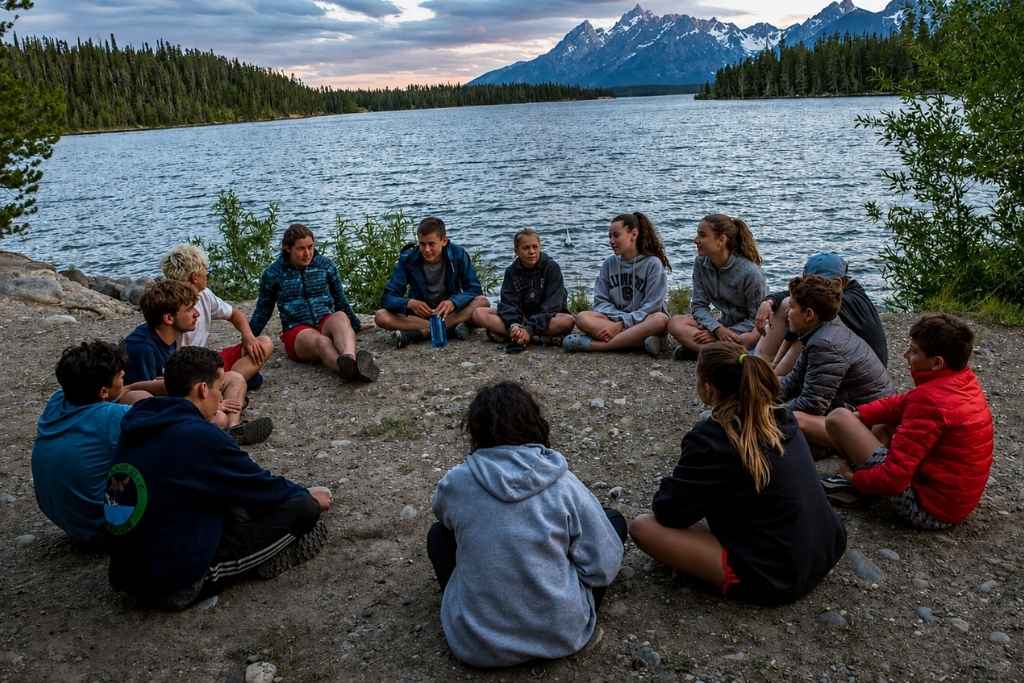
Overland’s program levels are designed around grade and experience:
- Adventure trips serve grades 4-6
- Explorer trips serve grades 6-9
- Expedition trips serve grades 9-11
- Challenge trips serve grades 10-12.
The structure gives students a developmental path they can follow from summer to summer. A younger camper might start with a one-week Adventure trip, focusing on getting comfortable outdoors and living with a group, and as they get older, the trips might become longer and more demanding. They might be asked to contribute more to the group and take on greater physical and emotional challenges.
In Outward Bound, students often move through a Training phase, where instructors will teach them core skills before moving them into the Main phase, where they’ll take on more group responsibility. From there, students go into the Final phase, where they take on more ownership over travel and decision-making.
The difference is partly timing. Overland gives students a multi-summer path that they can grow with, while Outward Bound typically creates a more concentrated expedition arc within a single course.
Activities and Destinations
When looking at activities and destinations, you really have to dig into the individual trip’s information page to get a better sense of what it offers.
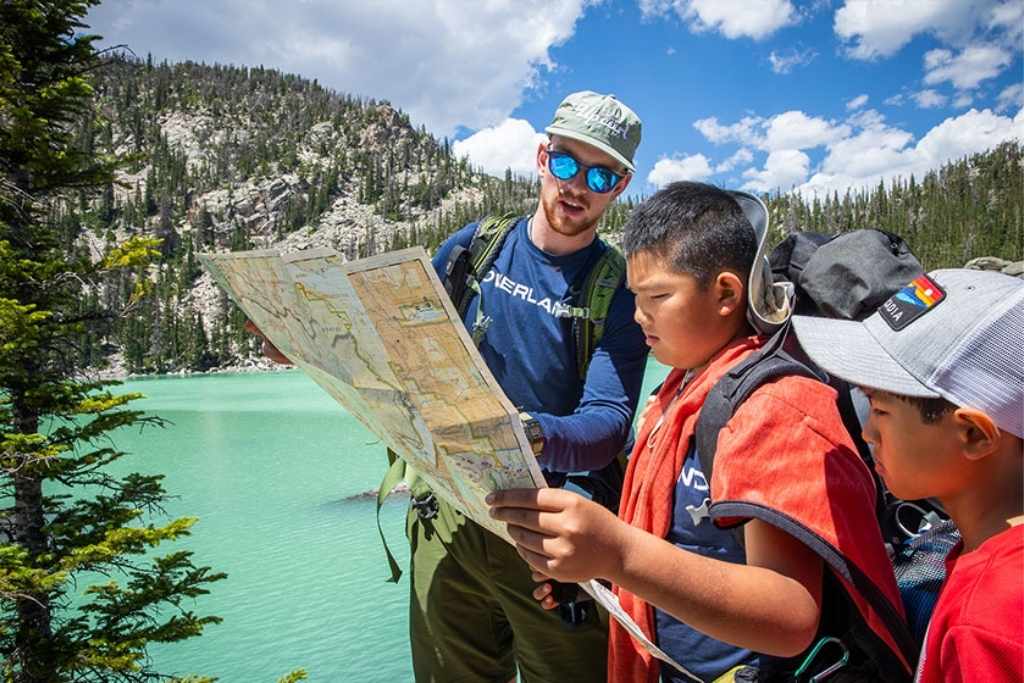
A middle school Overland student on the Alaska Explorer trip, for example, will get to experience a few day hikes, two multi-day backpacking sections, and three days of sea kayaking. Along the way, students will practice field skills, such as:
- Packing a backpack
- Reading trail signs
- Purifying water
- Packing lunch for the trail
- Using bear canisters
So not only are they hiking and kayaking, but they’re also learning how to use judgment in serious situations and be responsible for a group.
Outward Bound’s Boundary Waters courses offer a different kind of outdoor engagement. Students start off in Duluth, MN, then move into the Boundary Waters Canoe Area Wilderness, which is a region of lakes, streams, rock, and portage trails. The trip includes canoeing, carrying boats and gear from lake to lake, learning how to read maps, learning how to use a compass, cooking outside, rock climbing, and more. The entire experience is an expedition built around travel and skill-building.
Overland also gives students a wide range of destinations and trip styles as they get older. Some trips take place in the U.S., like the Appalachian Trail Expedition, while others, like the Kilimanjaro Challenge, take students halfway across the world. Depending on the Overland trip, the experience may involve rafting, biking, kayaking, service, language study, or International travel.
Outward Bound is similar in its variety. In the U.S., courses include backpacking, canoeing, sailing, climbing, rafting, mountaineering, and wilderness travel. Beyond the States, Outward Bound International oversees a network of 38 independent Outward Bound schools.
As a parent deciding between Overland vs. Outward Bound, it really comes down to the activities and experience. Look into what each trip offers your child and what kinds of activities they include.
How To Choose A Summer Adventure For Your Child
Get first-hand insights into what you should look for when choosing the next summer travel adventure for your child.
Leadership and Personal Growth
Leadership is a big part of both programs.
On Overland trips, students get the opportunity to be “leader of the day.” That student may help assess the group’s energy, plan snack and water breaks, assist with navigation, and lead games or activities at camp.
That job helps students build confidence and interpersonal skills, while encouraging them to pay closer attention to the group. It also helps them become more aware, learn how to communicate better, adjust when necessary, and take responsibility in front of their peers.
Overland also ties this growth to interpersonal skills, such as:
- Starting group activities
- Conversing with new friends
- Resolving conflict
- Giving and receiving feedback
- Finding compromise
- Modeling leadership
Outward Bound builds leadership through the expedition crew.
Students typically start off with more direct instruction before taking on responsibility as the course progresses. In some Outward Bound courses, students move from instructor-led training into peer leadership, shared problem-solving, and, for older students, a “final expedition” with instructors nearby but not immediately present.
Group Size and Social Experience
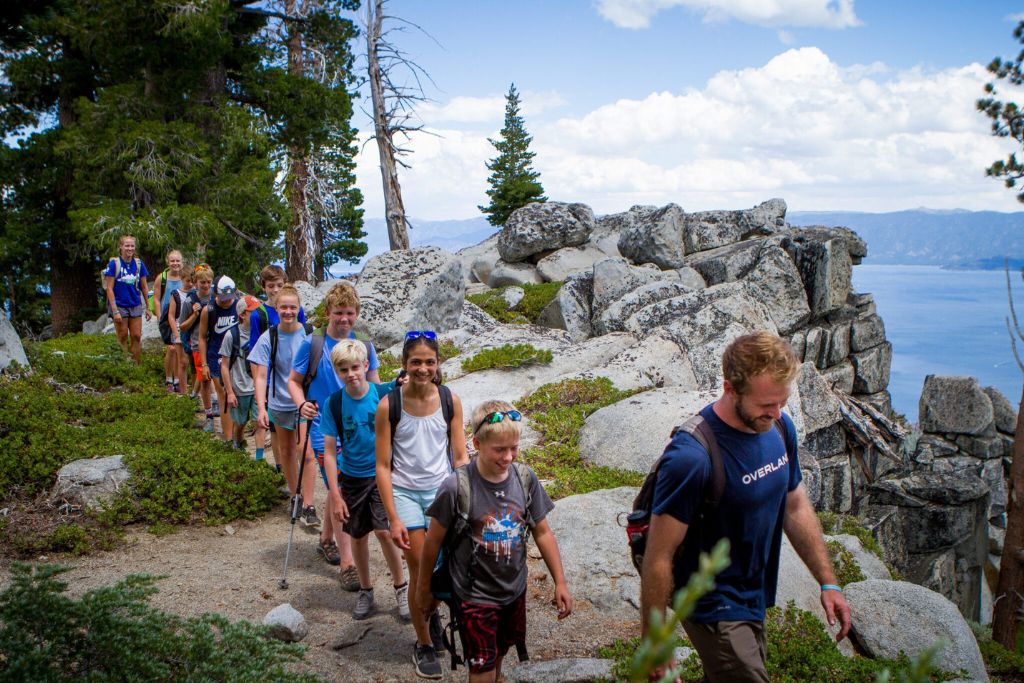
There’s quite a bit of overlap here, as both Overland and Outward Bound use small groups, and both expect students to travel, build problem-solving skills, learn to communicate better, and contribute to the people around them.
Overland limits groups to 12 students. When building those groups, there are a few things that are considered, including:
- Age
- Grade
- Gender
It also limits friend pairs so each group is welcoming to new students.
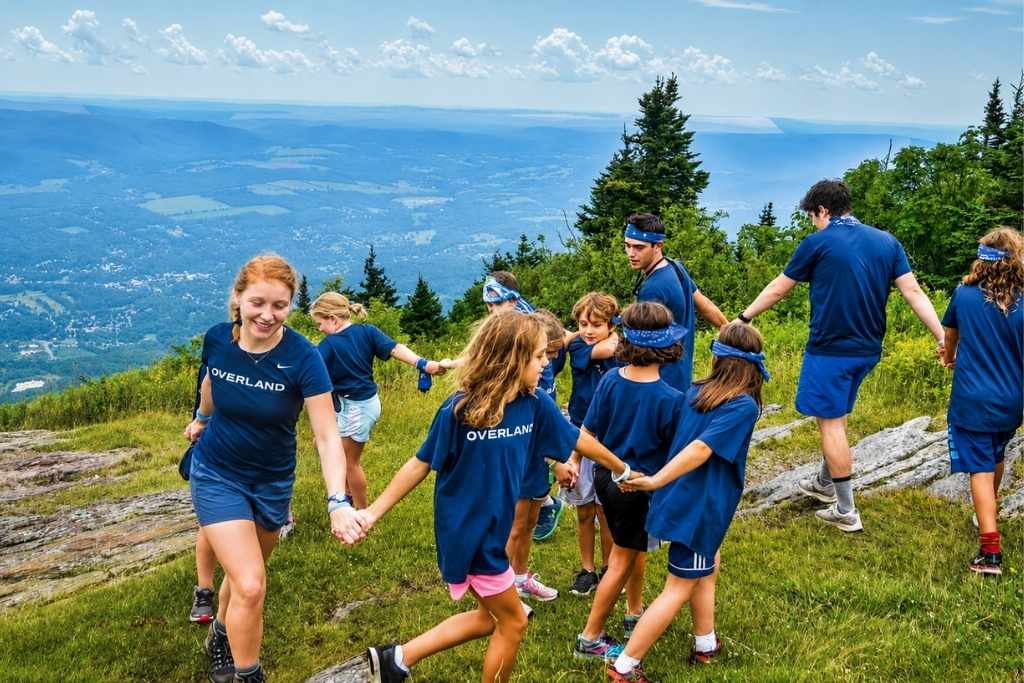
All students eat together, travel together, hike together, and learn each other’s habits. Because the groups are small, each student has more chances to be seen and included.
Outward Bound crews are also small, typically around 6 to 12 students, and youth courses are organized around age-appropriate options.
The organization’s language puts emphasis on the “crew” factor. Students are a “crew, not passengers,” meaning they share camp tasks, practice problem-solving skills, and take on greater responsibility as the course progresses.
The difference isn’t that one program is social, and the other is serious. Both use small groups as a teaching tool. Overland emphasizes carefully built peer groups within a student summer program, while Outward Bound emphasizes the crew as the working unit of the expedition.
Safety and Staff Qualifications
When you look at safety for any program, it’s important to look at specifics.
Both Overland and Outward Bound emphasize medical training, risk management, and field support. The details vary by program, but parents should be able to get clear answers about who is leading the group, what kind of training they have, and how they’re supported by the organization once they’re in the field.
The Overland hiring process is very thorough. It includes a written application, references, interviews, and background checks. All leaders are certified in First Aid and CPR, and hired leaders are expected to arrive with CPR/AED and Wilderness First Aid certifications. Before a trip begins, leaders must also come to Williamstown for additional training with Overland’s full-time staff.
Outward Bound has detailed staff training information as well. Its instructors receive training in teaching, facilitation, risk management, decision-making, conflict resolution, and emergency procedures. Each instructor is also certified in CPR and first aid, and instructors who teach overnight courses hold Wilderness First Aid or Wilderness First Responder certification.
The difference between Overland vs. Outward Bound isn’t that one program takes safety seriously, and the other doesn’t. Both do. But as a parent, you can always look into how safety fits into the specific trip your child plans to join.
Trip Length and Cost
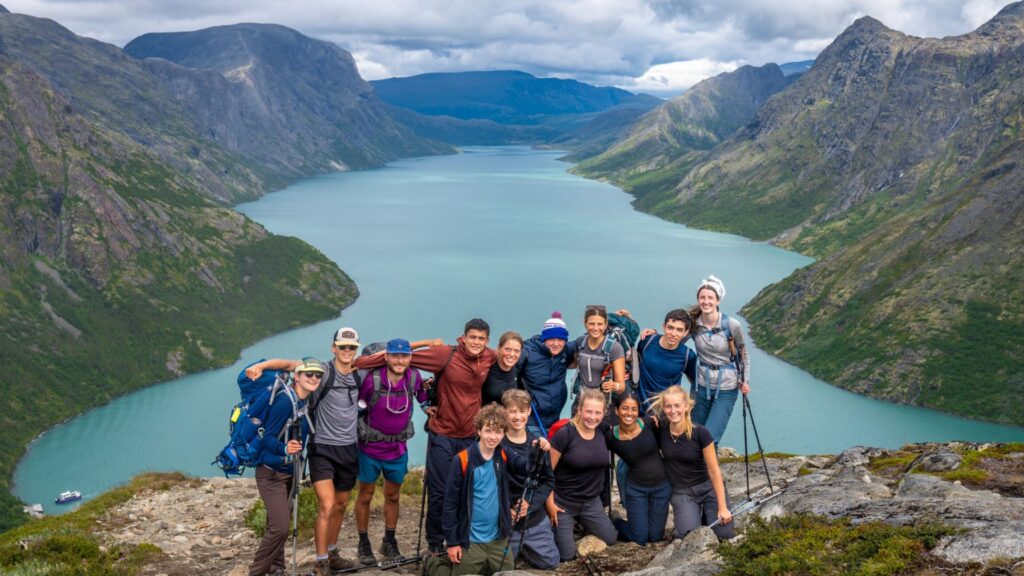
Overland trips generally run one, two, or three weeks. It’s a great format for families who are planning around other summer activities, like sports or vacations. And with shorter trips, younger students have a developmentally appropriate way to build experience before moving into longer, more involved programs.
Outward Bound has a wider range of course lengths. Some youth courses last about a week or two. However, there are also young adult, adult, and semester-style programs that run much longer. Some expeditions are more than 50 days.
As for the cost, it depends on the program.
Overland Summers has financial aid and scholarship awards ranging from 10% to 50% of the trip fee, excluding transportation and gear costs. Outward Bound also offers national and regional scholarships.
Cost is too dependent on the trip to compare. There are several factors to look at, including gear, travel, insurance, equipment, transportation, permits, lodging, and more.
If you want to compare costs, the best way to do it is to look at similar trips from each that match your child’s age and interests, and work through them line by line to see what each one includes.
Overland Summers May Be Better for Your Child If…
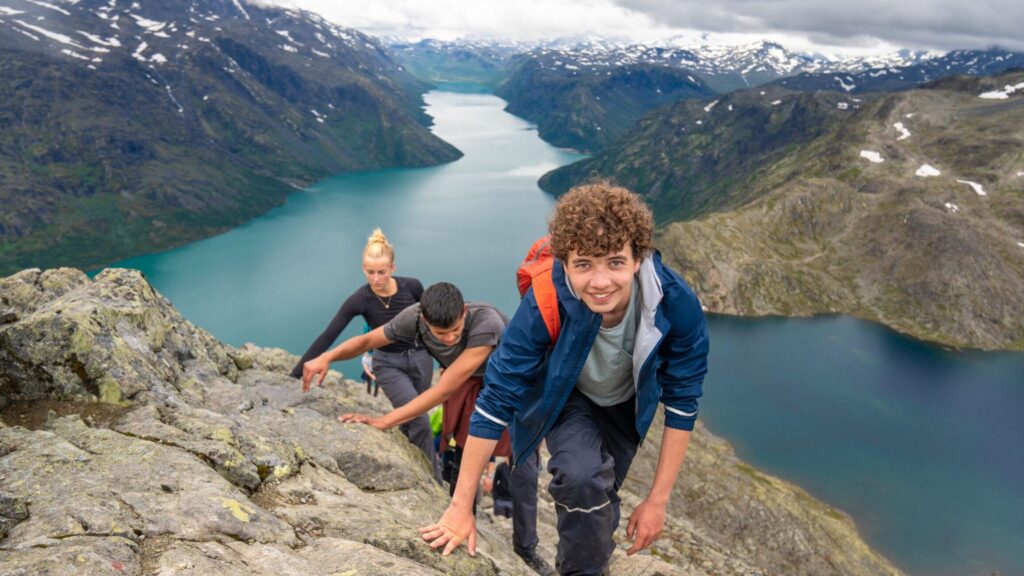
Overland Summers may be a good fit for your child if they want a real outdoor challenge with ample support and a growth pathway over the course of several summers.
It’s a particularly good program if your child is new to outdoor travel or ready to practice more independence through a program that matches the challenge level to their age and readiness.
Is Overland Summers a Good Alternative to Outward Bound?
Yes, especially for school-aged students who want outdoor challenge in a smaller, grade-based summer program rather than a more expedition-centered course.
The two programs overlap in many ways. Both use outdoor experience to build confidence, responsibility, leadership, communication, and resilience. Students live with a group, learn from trained leaders, and learn to challenge themselves away from home.
For parents comparing Overland vs. Outward Bound, Overland is also a great fit if you want your child to learn more about leadership and responsibility in a small peer group. Not only is your child completing activities, but they’re also learning how to contribute, communicate, lead, listen, and take responsibility each day.
Choosing the Right Outdoor Program
Start with your child’s age and outdoor experience. Then look at the level of independence each program expects.
If you need help choosing, contact our Overland Summers crew or request a catalog.